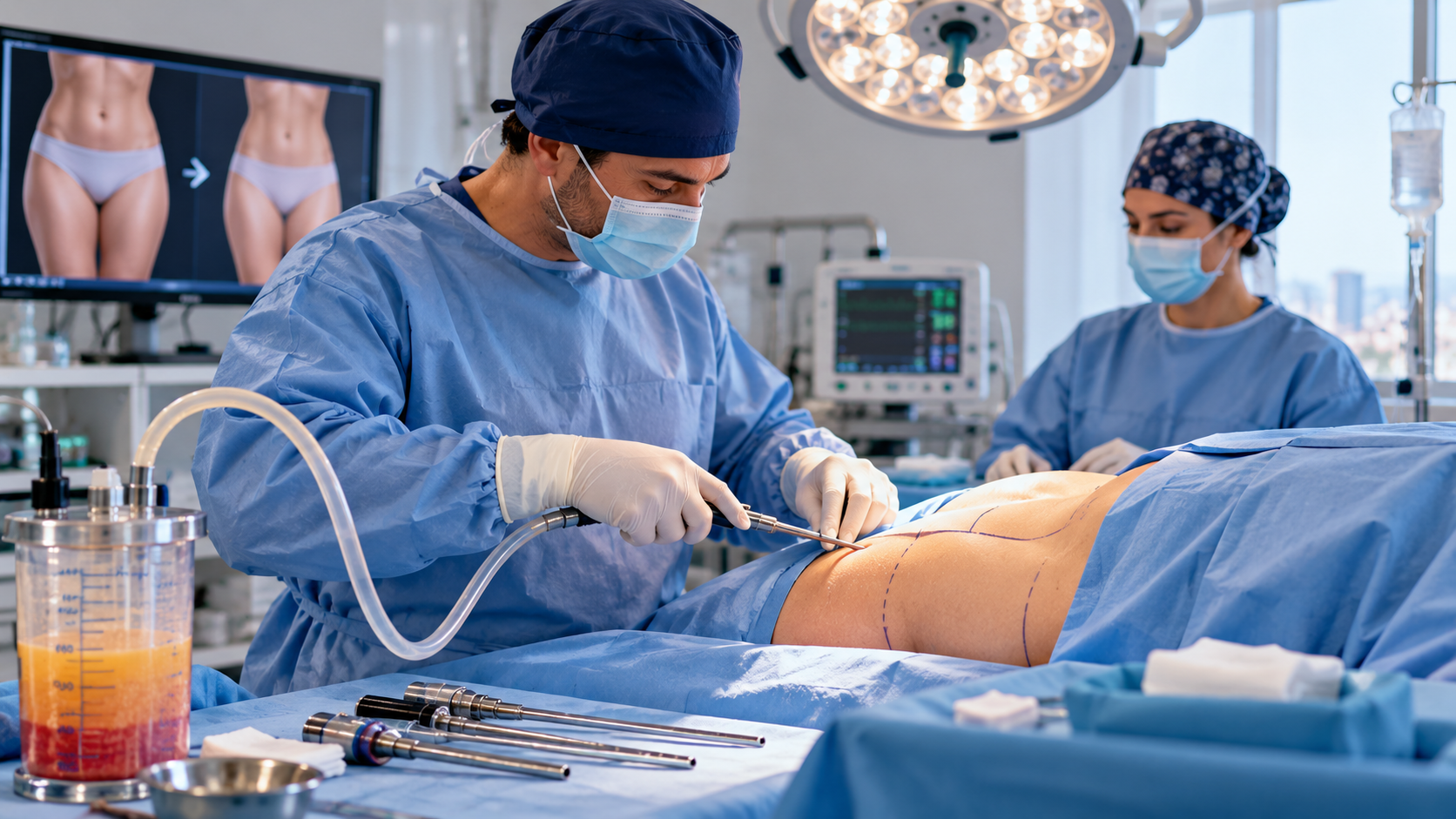
What Is Liposuction?
Liposuction is a cosmetic surgical procedure used to remove localized deposits of fat and improve body contour.
It is commonly performed on areas where fat may remain despite healthy eating and regular exercise.
Liposuction is not designed to treat obesity or replace long-term weight management.
Its main goal is to reshape specific areas of the body.
Which Areas Can Be Treated?
Liposuction may be performed on areas such as:
- Abdomen
- Waist and flanks
- Hips
- Thighs
- Upper arms
- Back
- Chin and neck
- Buttocks
- Chest in selected patients
More than one area can sometimes be treated during the same operation, depending on the amount of fat being removed and the patient's overall health.
Who May Be Suitable for Liposuction?
The best candidates are generally adults who are close to a stable, healthy weight but have specific areas of excess fat that do not respond well to diet and exercise.
Other important factors include:
- Good overall health
- Firm and reasonably elastic skin
- Realistic expectations
- No major condition that could interfere with healing
- Not smoking or vaping, or being able to stop before surgery
Patients with significant loose skin may need another procedure, such as a tummy tuck, rather than liposuction alone.
Is Liposuction a Weight-Loss Operation?
No.
Liposuction removes fat from selected areas but is not intended to produce major overall weight loss.
It also does not treat cellulite or remove stretch marks.
Patients seeking treatment for obesity may need a different medical weight-management approach involving nutrition, medication or bariatric surgery.
What Happens Before Surgery?
Before the procedure, the plastic surgeon evaluates the patient's health, body shape, skin quality and treatment goals.
The assessment may include:
- Medical history
- Current medications
- Previous operations
- Blood tests when necessary
- Discussion of smoking
- Examination of the areas to be treated
- Clinical photographs
The surgeon should also explain how much change is realistically possible.
How Is Liposuction Performed?
During the procedure, the surgeon makes small incisions near the treatment area.
A thin tube called a cannula is inserted beneath the skin.
The surgeon moves the cannula through the fatty tissue while suction removes unwanted fat cells.
A special fluid containing medication is often injected beforehand to help reduce bleeding, swelling and discomfort.
Depending on the treatment area and amount of fat removed, liposuction may be performed under local anesthesia with sedation or general anesthesia.
Are There Different Liposuction Techniques?
Yes.
Traditional suction-assisted liposuction remains commonly used.
Some procedures may also use technologies such as:
- Ultrasound-assisted liposuction
- Power-assisted liposuction
- Laser-assisted techniques
These technologies may help break up fat before removal.
However, no single technique is automatically best for everyone. The surgeon's experience and appropriate patient selection are often more important than the name of the technology.
What Is Recovery Like?
Bruising, swelling, tenderness and temporary numbness are common after liposuction.
Patients are usually asked to wear a compression garment to control swelling and support the treated areas while they heal.
Light walking is encouraged relatively early, but strenuous exercise should be avoided until the surgeon says it is safe.
Many patients can return to work within one to several weeks depending on how much treatment was performed and the type of work they do.
When Will the Final Result Be Visible?
The body may look swollen immediately after surgery, so the final contour is not visible straight away.
Swelling gradually decreases over the following weeks and months.
The treated area may continue to improve for several months, and the final result can sometimes take up to around six months to fully settle.
Are the Results Permanent?
The fat cells removed by liposuction do not grow back.
However, the remaining fat cells in the body can still enlarge if the patient gains weight.
Significant weight gain after surgery can therefore change the result.
Maintaining a stable weight, healthy nutrition and regular activity helps preserve the new body contour.
What Are the Possible Risks?
Liposuction is surgery and can cause complications.
Possible risks include:
- Bleeding
- Infection
- Swelling and bruising
- Persistent numbness
- Fluid accumulation
- Uneven or irregular contours
- Changes in skin pigmentation
- Loose or rippled skin
- Blood clots
- Complications related to anesthesia
- Injury to deeper tissues or organs in rare cases
- Need for revision surgery
Treating very large areas or removing large amounts of fat may increase the complexity and risks of the procedure.
Choosing a Liposuction Surgeon
Patients should choose a properly trained plastic surgeon with experience in body-contouring surgery.
A good consultation should explain:
- Whether liposuction is appropriate
- Which areas can realistically be improved
- Which technique is recommended
- Where the procedure will be performed
- Expected recovery
- Possible risks
- What the final result may realistically look like
Liposuction can improve body contour, but it should be approached as a surgical procedure rather than a quick method of losing weight.
The best results come from appropriate patient selection, realistic expectations, safe surgery and maintaining a stable weight afterward.
Reviewed by our medical coordination team
TipWay
Ready to take the next step?
Request a consultation with a specialist, check whether your insurance is accepted, or start a free medical second opinion — no commitment.